
Withings Analysis of 469,000 Menstrual Cycles Finds 3 in 4 Women Sleep Worse the Week Before Their Period, With US Women Hitting the Lowest Sleep Scores of 11 Countries
BOSTON, Oct. 15, 2026
Press Release Disclaimer: This is a press release distributed through the XPR Media network. It has not been independently verified by our newsroom.
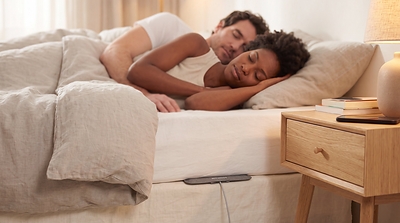

Withings Analysis of 469,000 Menstrual Cycles Finds 3 in 4 Women Sleep Worse the Week Before Their Period, With US Women Hitting the Lowest Sleep Scores of 11 Countries
PR Newswire
BOSTON, Oct. 15, 2026
Data from 69,000 women in 11 countries, including more than 16,000 in the US, shows deep sleep falls and night-time heart rate climbs in the premenstrual week, a pattern seen in every country studied. US women record the highest night-time heart rate of all.
BOSTON, Oct. 15, 2026 /PRNewswire/ — A new Withings analysis of 469,000 menstrual cycles from 69,000 women not reporting use of hormonal contraception, across 11 countries, including more than 16,000 women in the US, finds that sleep quality falls in the week before a period for 3 in 4 women (76%). Average sleep score drops 3.4 points compared with the days just after a period, while night-time heart rate rises in 9 in 10 women, by 2.8 beats per minute on average. US women fare worst of all 11 countries: in the week before their period their sleep score falls to 68.5, the lowest in the study, their nights are the most broken (5.4 interruptions a night) and their night-time heart rate is the highest (68.6 bpm).
A shared pattern, not a national one: In every one of the 11 countries, average sleep score fell by 2.9 to 4.0 points, and no country differed significantly from the rest. The dip is a consistent trend across all women, not a country-specific one; what differs is where women start.
Measured night after night: This analysis was made possible by data gathered by Withings smartwatches such as ScanWatch 2, smart scales such as Body Scan, BodyFit and BodyScan 2, and sleep trackers such as Sleep Mat.
“Looking across 469,000 cycles, the same pattern appears again and again: in the days before a period, night-time heart rate climbs and sleep becomes lighter, and the women whose heart rate rises most see the biggest drop in sleep quality. These are small shifts, but they are remarkably consistent from one country to the next. Knowing the pattern is normal and predictable can help women make sense of a restless night or a heavier morning on the scale, rather than worry about it.”
Livia Robic Women’s Health Expert, Withings
Less Deep Sleep, Not Less Sleep
The loss is in quality rather than quantity. Women sleep only about 5 minutes less in the premenstrual week, but deep sleep falls by 1.8 percentage points (around 5% of their usual deep sleep) and is replaced by lighter sleep (+2.0 points), while heart rate variability, a marker of recovery, drops by 3 ms. In the US, deep sleep falls by 1.6 points and night-time heart rate rises by 2.9 bpm.
The Period-Week Weight Gain Is Water, Not Fat
During their period, 74% of US women weighed more than in the days just after it, an average of 0.6 lb more. Yet body fat percentage did not change at all (0.00 points), while body water rose by around 0.4 lb, meaning more than half of the gain on the scale is fluid. US women carry the highest average weight (166 lb) and body fat of the 11 countries, but the cyclical swing itself was the same everywhere (0.5–0.7 lb).
Why Sleep Dips and Heart Rate Rises
After ovulation, the body produces progesterone, which raises core body temperature and shifts the nervous system toward a more alert state, pushing heart rate up and HRV down. Research from SRI International in California shows that sleep quality is poorer before the period and that REM sleep falls in the second half of the cycle1, and a Columbia University study found that women’s heart rate was 2.3 bpm higher and heart rate variability lower in the second half of the cycle than in the first2. Because the body needs to cool down to enter deep sleep, a warmer body tends to sleep more lightly. The Withings data fits this picture: the dip began just after estimated ovulation and bottomed out 3–5 days before the period; it was larger in cycles with confirmed ovulation (−5.5 points); and women whose night-time heart rate rose most lost 7.0 sleep-score points, while those with the smallest rise saw no drop.
By Country: Key Sleep, Heart Rate and Body Composition Data (ranked by lowest sleep score)
|
Country |
Women |
Sleep score, |
Sleep score |
Deep + REM |
Night-time |
Night-time |
Weight |
Body fat |
|
United States |
8,643 |
68.5 |
−3.4 |
−1.0 |
68.6 |
+2.9 |
+0.6 lb |
0.00 |
|
Australia |
1,134 |
69.6 |
−3.5 |
−1.2 |
67.3 |
+2.9 |
+0.7 lb |
+0.01 |
|
Norway |
558 |
70.0 |
−3.5 |
−1.3 |
65.0 |
+2.9 |
+0.7 lb |
+0.05 |
|
Sweden |
672 |
71.3 |
−3.4 |
−1.1 |
64.7 |
+2.9 |
+0.6 lb |
+0.03 |
|
Spain |
738 |
71.5 |
−3.3 |
−1.1 |
64.7 |
+2.8 |
+0.5 lb |
−0.05 |
|
Denmark † |
338 |
71.5 |
−4.0 |
−1.6 |
64.7 |
+2.8 |
+0.5 lb |
−0.16 |
|
United Kingdom |
3,020 |
71.8 |
−3.5 |
−1.1 |
66.1 |
+2.8 |
+0.6 lb |
+0.04 |
|
Italy |
605 |
72.0 |
−3.4 |
−1.3 |
64.5 |
+2.7 |
+0.5 lb |
−0.10 |
|
Germany |
9,455 |
72.6 |
−3.5 |
−1.4 |
64.9 |
+2.8 |
+0.6 lb |
+0.01 |
|
France |
7,164 |
74.0 |
−3.4 |
−1.4 |
65.7 |
+2.8 |
+0.5 lb |
−0.05 |
|
Finland † |
385 |
74.1 |
−2.9 |
−1.6 |
64.8 |
+3.0 |
+0.5 lb |
−0.06 |
|
All 11 countries |
32,712 |
71.6 |
−3.4 |
−1.2 |
66.2 |
+2.8 |
+0.6 lb |
−0.01 |
Countries ranked from lowest to highest premenstrual sleep score; red = least favorable value in each column. Changes vs the days just after the period (follicular phase), women not using hormonal contraception, age-standardized; levels are unadjusted averages. Sleep and heart rate: week before the period; weight and body fat: during the period. † Fewer than 500 women: interpret with caution. No country differed significantly from the rest on the sleep-score dip.
Women Using Hormonal Contraception See Less Impact on Sleep Quality and Heart Rate
The data also detected a much smaller impact among women using hormonal contraception. Across the 11 countries combined (3,362 women), their sleep score fell by 1.4 points in the week before their period, compared with 3.4 points in natural cycles, and their night-time heart rate rose by 1.0 bpm rather than 2.8 bpm. The drop in heart rate variability almost disappeared (−0.4 ms vs −3.0 ms). Because most hormonal methods smooth out the natural rise and fall of progesterone and estrogen, this supports the role of cycle hormones in the pattern.
Notes to Editors
Methodology
Observational, within-woman analysis of anonymized, aggregated data from Withings connected-device users who log their periods: around 69,000 women aged 18–50 with natural menstrual cycles (not using hormonal contraception) and at least three valid cycles, spanning around 469,000 cycles, in Australia, Denmark, Finland, France, Germany, Italy, Norway, Spain, Sweden, the United Kingdom and the United States, between September 2025 and September 2026. Cycle phases were estimated from logged period dates, and each woman was compared with herself within the same cycle. Findings are associations, not proof of cause, and Withings users may not represent the general population. Women using hormonal contraception (self-reported) were analyzed separately for the 11 countries combined: around 6,800 women and 36,000 cycles. Weight changes are within-cycle; after adjusting for longer-term weight trends, the worldwide period-week gain is about 0.3 lb. Full data points: See here.
The Withings Menstrual Cycle Report 2026
Learn more about how sleep, heart rate, body composition and activity change across the menstrual cycle by reading The Withings Menstrual Cycle Report 2026: See here.
Withings Health Assistant
The Withings Health Assistant now draws on Withings’ own research into women’s health. Two studies of anonymized measurements from Withings members looked at how sleep, heart rate, HRV, weight and activity change across the menstrual cycle, and how body composition, sleep, blood pressure and arterial stiffness change as women move through their thirties, perimenopause, menopause and beyond. When a member asks why their sleep dips before their period, or how their measurements compare with other women at their stage of life, the assistant can now answer with what Withings has seen across its own community, not only with general information from the web.
About Withings
Withings empowers people to live longer, healthier lives. Founded in 2008, Withings invented the first smart scale just one year later and has since pioneered connected health devices that bring clinical-grade measurement into everyday life, at home and without extra effort. For its over 15 million users worldwide, Withings turns daily routines into a continuous view of their health, helping them see how their body changes over time, catch early signals before they become urgent, and share what they learn with their doctors. Withings works with leading academic and clinical research institutions to keep every measurement grounded in science. To learn more, visit withings.com. Withings. With you. For life.
Press Contact
Alex McKechnie | alex.mckechnie@12080group.com | 475.399.4056
References & Disclaimers
¹ Baker FC, Lee KA. Menstrual cycle effects on sleep. Sleep Medicine Clinics (SRI International, California). 2018. doi:10.1016/j.jsmc.2018.04.002.
² McKinley PS, King AR, Shapiro PA, et al. The impact of menstrual cycle phase on cardiac autonomic regulation. Psychophysiology (Columbia University, New York). 2009;46(4):904–911.
Not medical advice: This release is for information only and is not a substitute for professional medical advice, diagnosis or treatment. Anyone concerned about their sleep, menstrual cycle, heart rate or weight should consult a healthcare professional.
Devices: Cycle-tracking features on ScanWatch 2 are not medical features and are not intended for contraception or conception support. Temperature tracking indicates deviations from a user’s typical pattern and is not a medical thermometer.

 View original content to download multimedia:https://www.prnewswire.com/news-releases/withings-analysis-of-469-000-menstrual-cycles-finds-3-in-4-women-sleep-worse-the-week-before-their-period-with-us-women-hitting-the-lowest-sleep-scores-of-11-countries-302910139.html
SOURCE Withings



