
Qtonic Quantum Launches QHunt for Mission Systems, with Signed Cryptographic Inventories Recipients Can Verify Themselves
Qtonic Quantum Corp launched QHunt at AFCEA TechNet Augusta 2026, applying its cryptographic assessment core to mission
Press Release Disclaimer: This is a press release distributed through the XPR Media network. It has not been independently verified by our newsroom.
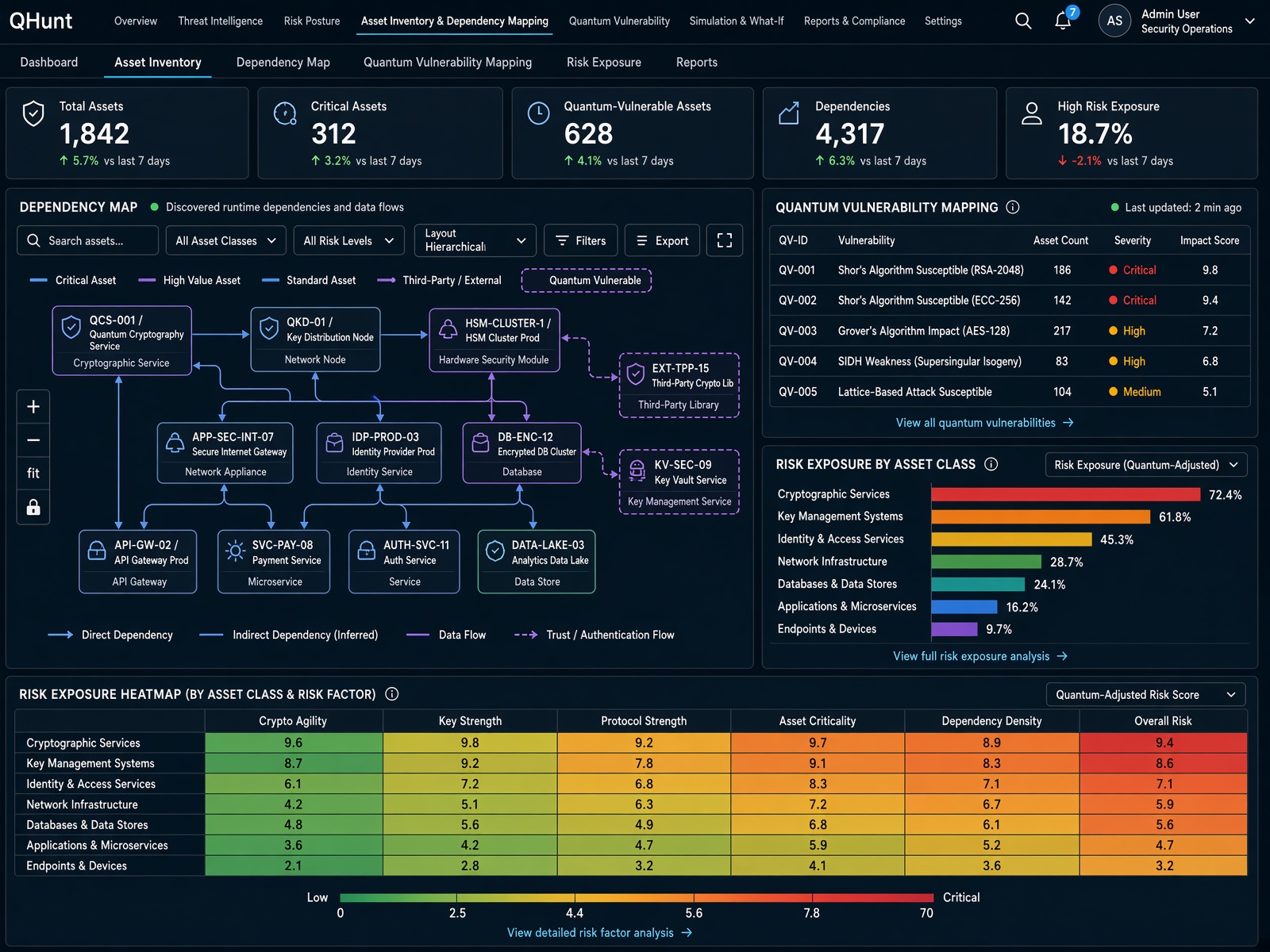

Qtonic Quantum Corp launched QHunt at AFCEA TechNet Augusta 2026, applying its cryptographic assessment core to mission and operational technology systems that cannot be taken offline for a scan. QHunt runs inside a published non-destructive engagement envelope, with a dual attestation gating any destructive action, and produces a cryptography bill of materials in CycloneDX 1.7 signed under FIPS 204. A public sample returns a passing official-schema check from a single command.
Augusta, GA August 19, 2026 –(PR.com)– The Department of War has given the force a date. High-impact and national security systems must support quantum-resistant cryptography by December 31, 2030, and the force must use it by December 31, 2031, unless otherwise noted. Meeting that date requires knowing what cryptography is running today. In garrison IT, that is an audit. In a fires network, a vehicle bus, or a forward node, it is a problem most tools are not safe to touch.
Qtonic Quantum Corp today launched QHunt at AFCEA TechNet Augusta 2026. QHunt applies the company’s assessment core to the warfighter market, and the company built it to be the strongest cryptographic assessment a mission owner can put against those systems. It is scoped for operational technology and mission environments and runs inside a non-destructive engagement envelope, which is why it is a separate product rather than a configuration. Tools built for enterprise networks are not safe to point at systems that control physical processes.
That envelope is published rather than asserted. Qtonic Quantum’s engagement policy is posted at qtonicquantum.com/engagement-policy, and any destructive action is gated behind a dual attestation, which takes it out of the hands of any single operator. A program office can read the limits before it grants access, and does not have to take them on trust.
QHunt engagements produce a cryptography bill of materials in CycloneDX 1.7, signed with ML-DSA-65 under FIPS 204. CycloneDX is the machine-readable format the federal inventory requirement is converging on, and Executive Order 14412 directs CISA and NIST to publish minimum elements for a cryptographic bill of materials. A program that captures its inventory in that format now is not rebuilding it when the elements land.
Qtonic Quantum publishes the validation check rather than asserting it. A signed sample of that output sits at api.qtonicquantum.com/public/trust/qhunt-cbom and reports schema_validation.ok true against the official CycloneDX 1.7 schema. One command returns the specification version, the signature algorithm, and the schema result, with no vendor contact required. The published file is a format sample and a signature envelope rather than a customer mission-system inventory, and it says so in its own metadata.
Alongside the launch, Qtonic Quantum released a 100-page study of cryptographic exposure across 20 military mission domains, with a full source register. It is available at qtonicquantum.com/images/technet-report/technet-augusta-2026-enterprise-warfighter.pdf.
Qtonic Quantum Corp is a quantum cyber risk and vulnerability intelligence firm working across enterprise and federal environments. QHunt joins QScout, QStrike, and QSolve, which find cryptographic exposure, prove material risk, and close it. QHunt runs the same governed module catalog as QScout and carries the find step into environments the enterprise line was never scoped to enter.
Assessment is delivered operator-to-operator inside the customer’s boundary rather than as a hosted service. For program offices running air-gapped, restricted, or on-premise mission systems, that removes the question of where the cryptographic inventory goes after it is collected.
The timing is set by policy. Executive Order 14412, signed June 22, 2026, directs federal action on advanced cryptographic attacks. The Department of War Post-Quantum Cryptography Strategy, released June 23, 2026, sets the 2030 and 2031 milestones and directs department-wide cryptographic inventories. Commercial National Security Algorithm Suite 2.0 requires quantum-resistant algorithms in new national security system acquisitions beginning January 1, 2027. Programs that cannot see their own cryptography cannot meet any of it.
“You cannot defend what you have never counted,” said Lieutenant General Roger Cloutier, U.S. Army (Retired), former Commander of NATO Allied Land Command. “In garrison that is an audit finding. Forward, in systems you cannot take offline to check, it is a readiness problem. Knowing where your cryptography fails before an adversary does is the whole point.”
QHunt is available now for scoped engagements. Qtonic Quantum Corp is a SAM.gov registered federal contractor, UEI FRYFAD3GW5W5, CAGE Code 14E99, NAICS 541512 and 541519.
About Qtonic Quantum Corp
Qtonic Quantum Corp is a quantum cyber risk and vulnerability intelligence firm serving enterprise and federal environments. The company helps security leaders, program owners, and boards find cryptographic exposure, prove material risk, and fix it continuously through QScout, QStrike, QSolve, and QHunt. Qtonic Quantum is vendor-neutral and is not paid by any vendor to promote its solution. The company is headquartered in Miami, Florida, with research and development in Be’er Sheva, Israel. Post-Quantum Ready, Continuously™.
Contact Information:
Qtonic Quantum Corp.
Jessica Gold
1 866 4 QTONIC
Contact via Email
www.qtonicquantum.com
Read the full story here: https://www.pr.com/press-release/976825
Press Release Distributed by PR.com
Media gallery
