Carriage Shoppe Adds August Guidance for Evaluating Road-Related Vehicle Impacts
Fort Collins, CO - August 19, 2026 - PRESSADVANTAGE - Carriage Shoppe has added August consumer guidance addressing how
Press Release Disclaimer: This is a press release distributed through the XPR Media network. It has not been independently verified by our newsroom.

Fort Collins, CO – August 19, 2026 – PRESSADVANTAGE –
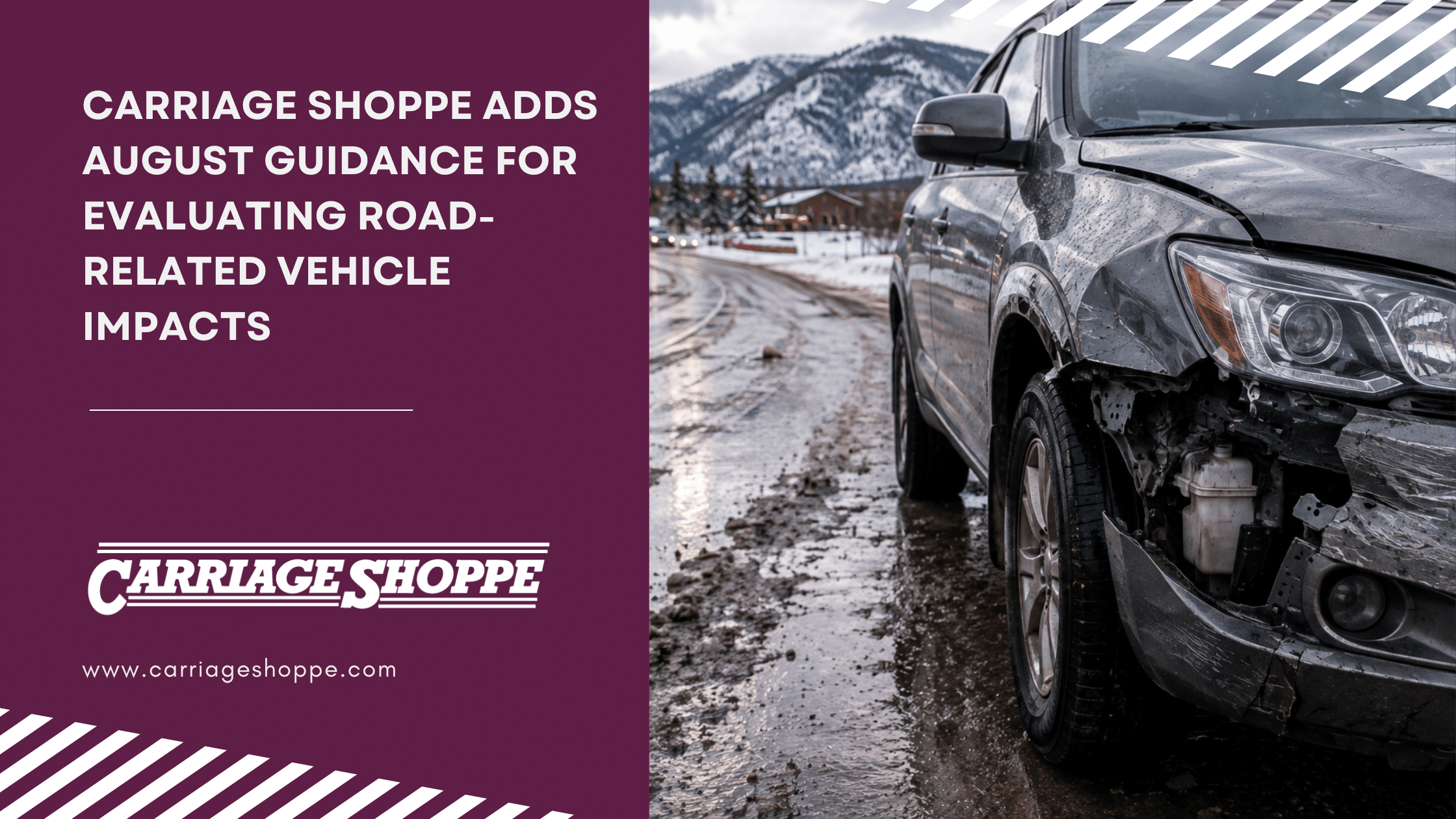
Carriage Shoppe has added August consumer guidance addressing how drivers can document vehicle conditions after curb impacts, pothole strikes, road-debris contact, and other road-related incidents before a collision repair evaluation.
The new material expands Carriage Shoppe’s existing collision repair information in three specific areas: documenting the location and direction of an impact, recognizing observable changes that may be relevant during an inspection, and understanding why vehicle configuration can influence which components or procedures technicians evaluate.
Carriage Shoppe operates in Fort Collins as part of Yoder Collision Network, the collision repair division of the Yoder Family of Companies. The August update was developed to address road-related incidents that may not resemble a conventional vehicle-to-vehicle collision but can still leave drivers with questions about what information is useful during an evaluation.
The first addition addresses curb and pothole impacts. Unlike an impact centered on a bumper or exterior body panel, these incidents can involve direct contact with a tire or wheel.
The updated information recommends that drivers document where contact occurred and note observable changes following the incident. Examples can include visible tire or wheel changes, a steering wheel that appears positioned differently, a new vibration, or a difference in how the vehicle tracks.
These observations are intended to provide technicians with context. They do not establish that alignment, steering, suspension, wheel, or other repairs are necessary. Technical conclusions depend on the condition of the individual vehicle, relevant measurements, and applicable vehicle information.
The second addition focuses on road-debris contact. Depending on the circumstances, roadway objects can contact painted surfaces, bumper covers, lamps, trim, glass, wheels, or other exterior components.
The August information encourages drivers to document visible chips, scratches, cracks, displaced components, and the location where contact occurred. Technicians can then evaluate the affected area and determine which repair procedures, if any, apply.
This approach is intended to make the initial evaluation more specific. Rather than asking consumers to determine whether damage is cosmetic or structural, the updated material focuses on information they can readily observe and communicate.
The third new section addresses vehicle technology located in or near exterior components.
Depending on vehicle configuration, cameras, radar units, parking sensors, wiring, and related equipment can be positioned within or near bumpers, grilles, mirrors, windshields, lamps, and other exterior areas.
Carriage Shoppe’s August guidance does not suggest that contact near one of these areas automatically requires scanning, calibration, replacement, or another specific procedure. Instead, it explains that the vehicle model, affected components, repair operations, inspection findings, and applicable manufacturer information determine which procedures are relevant.
This vehicle-specific approach is particularly important because two road incidents that appear similar from outside may involve different components or equipment.
For example, the location of sensors and other exterior technology varies among vehicle makes, models, trim levels, and equipment configurations. Construction materials and component attachment methods can also differ.
The August update therefore advises consumers against judging the technical significance of an incident solely by the visible size of a dent, scratch, or other exterior change.
Carriage Shoppe also added information explaining why an initial exterior evaluation and a later repair plan may contain different levels of detail.
Some brackets, attachment points, fasteners, reinforcements, and adjacent components can be covered by exterior parts. When removal of an affected component becomes appropriate during repair planning, technicians can inspect areas that were not previously accessible and document their actual condition.
The updated material makes an important distinction: limited initial access does not mean concealed damage should be presumed. Repair-plan decisions are based on conditions documented on the individual vehicle.
This gives consumers a clearer framework for understanding why repair information can develop as an evaluation progresses without suggesting that every curb strike, pothole impact, or road-debris incident results in additional damage.
Seasonal road conditions provide the context for the August update. Changes in traction, roadway surfaces, construction activity, and loose debris can create different types of driving incidents during the year. The guidance focuses on what drivers can document after an incident rather than assigning a predetermined repair outcome to the road condition itself.
For consumers, the updated framework can be summarized in three steps: identify where contact occurred, document observable changes, and report any new differences in vehicle operation during the evaluation.
Technicians can then use those observations together with the vehicle’s condition, measurements when applicable, and manufacturer information to determine whether additional evaluation or repair procedures are appropriate.
The August additions are intended to make Carriage Shoppe’s existing collision repair information more useful for incidents outside the conventional vehicle-to-vehicle accident scenario. They provide drivers with a defined way to document curb contacts, pothole strikes, road debris, and related events without asking consumers to diagnose vehicle damage themselves.
Carriage Shoppe’s updated consumer information is available through the Yoder Collision Network collision repair resource.
About Carriage Shoppe
Carriage Shoppe is a Fort Collins collision repair facility and part of Yoder Collision Network, the collision repair division of the Yoder Family of Companies. The facility serves Fort Collins and surrounding communities with vehicle collision repair and related repair planning services.
###
For more information about Carriage Shoppe, contact the company here:
Carriage Shoppe
Micah
970 482 3597
officestaff@carriageshoppe.com
327 S Link Ln, Fort Collins, CO 80524