
Almond Market Set to Reach USD 39,288.85 Million by 2035 as Plant-Based Nutrition and Online Retail Accelerate Demand
Global Almond Market to Rise from USD 25,274.98 Million in 2025 to USD 39,288.85 Million by 2035 at a 4.51% CAGR
Press Release Disclaimer: This is a press release distributed through the XPR Media network. It has not been independently verified by our newsroom.
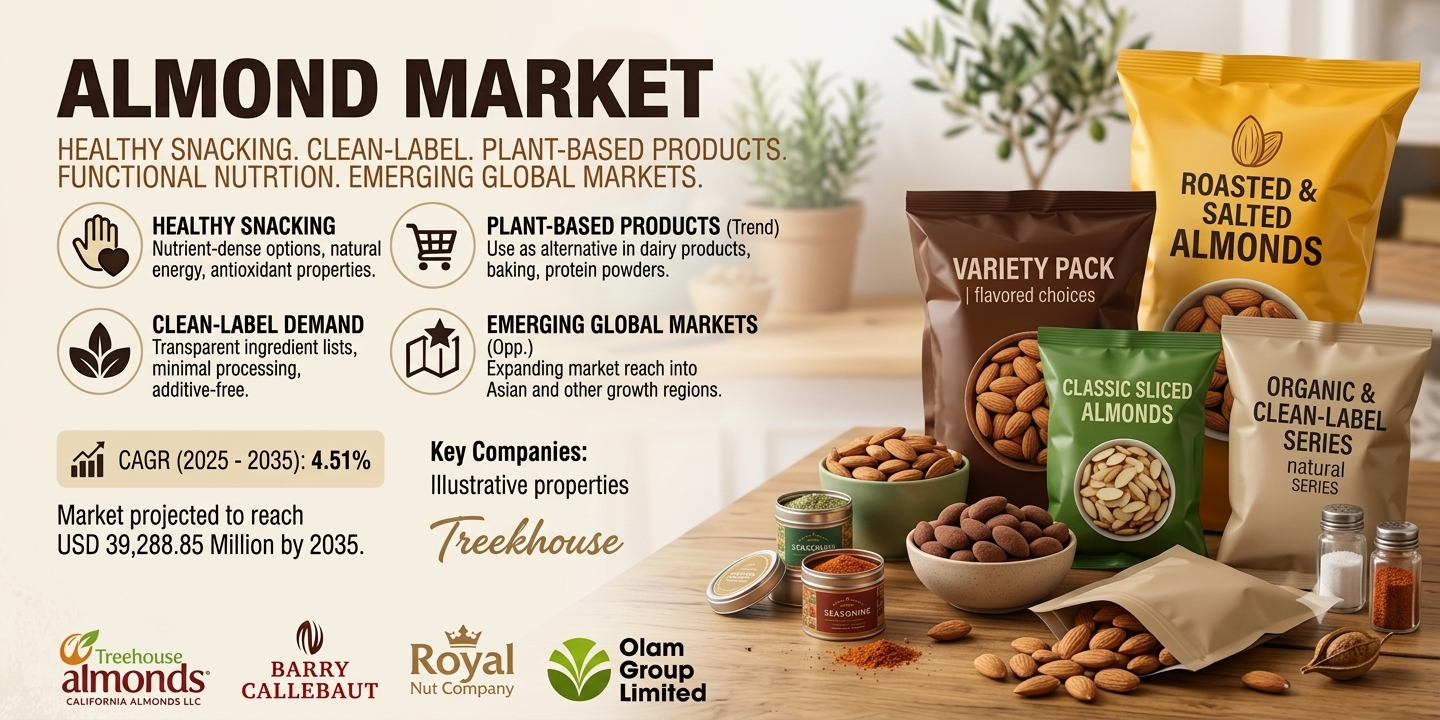

Global Almond Market to Rise from USD 25,274.98 Million in 2025 to USD 39,288.85 Million by 2035 at a 4.51% CAGR
NEW YORK, NY, UNITED STATES, September 1, 2026 /EINPresswire.com/ — Market Overview:
The global almond market is entering a sustained period of expansion as consumers increasingly seek nutritious, convenient, and versatile food ingredients that fit evolving dietary preferences. Almonds have moved beyond their traditional role as a snack and ingredient to become an important component across plant-based beverages, bakery products, confectionery, sports nutrition, functional foods, personal care formulations, and other consumer applications. Rising interest in healthier eating habits and plant-derived nutrition is creating favorable conditions for producers, processors, distributors, retailers, and brands operating throughout the almond value chain.
According to the latest market assessment, the global almond market was valued at USD 24,184.27 million in 2024. The market is projected to increase to USD 25,274.98 million in 2025 and is expected to reach USD 39,288.85 million by 2035, advancing at a compound annual growth rate of 4.51% between 2025 and 2035. The study covers historical developments from 2019 to 2023 and provides market projections for 2025 through 2035, with revenue estimates presented in USD million.
Challenges:
The almond industry faces several challenges that may influence production, costs, and supply stability. Weather fluctuations, water shortages, rising cultivation expenses, crop diseases, and environmental conditions can affect yields and raw-material availability. Supply-chain disruptions may also increase transportation, packaging, storage, and inventory costs, creating pressure for processors and manufacturers. Maintaining consistent quality and food safety throughout harvesting, processing, storage, and distribution remains essential. In addition, companies serving international markets must comply with different food-safety standards and regulatory requirements. These factors highlight the importance of efficient farming practices, strong supply networks, effective quality control, and careful production planning. Building resilient supply chains and improving operational efficiency can help industry participants manage uncertainties, maintain product quality, control costs, and respond more effectively to changing market conditions and consumer demand. As competition and sustainability expectations increase, producers and processors will need to adopt practical strategies that support reliable supply, responsible resource management, and long-term business performance.
Plant-Based Nutrition Drives Almond Demand:
One of the most significant forces influencing the almond industry is the continued shift toward plant-based foods. Consumers across developed and emerging economies are showing stronger interest in foods that are perceived as natural, nutritious, and compatible with vegetarian or flexitarian lifestyles. This trend is increasing demand for nuts and nut-derived ingredients, with almonds benefiting from their established reputation as a versatile plant-based food.
The movement toward plant-based consumption is also influencing beverage categories. Almond-based beverages have become increasingly visible as alternatives to conventional dairy products. Their application in coffee, smoothies, breakfast products, desserts, cereals, and cooking is broadening their consumer base. Food manufacturers are responding by introducing new almond-based formulations designed around convenience, taste, nutrition, and specialized dietary preferences.
The popularity of plant-forward eating is not limited to households. Restaurants, cafés, foodservice providers, and packaged-food manufacturers are also expanding plant-based selections. As almonds can be processed into milk, flour, butter, paste, meal, and other formats, they provide manufacturers with several opportunities to participate in this transition.
Competitive Landscape:
Regional performance within the almond industry is influenced by agricultural conditions, processing infrastructure, consumer demand, trade networks, and the development of food manufacturing sectors. Regions with established almond production and processing capabilities benefit from integrated supply chains, while emerging consumption markets provide opportunities for distribution and product development.
The competitive environment includes growers, processors, ingredient suppliers, food manufacturers, distributors, and branded consumer-product companies. The companies identified in the supplied report details include:
▪️Blue Diamond Growers
▪️Treehouse California Almonds LLC
▪️Barry Callebaut
▪️Royal Nut Company
▪️Olam Group Limited
▪️Harris Woolf Almonds
▪️Almondco Australia
▪️Borges Agricultural & Industrial Nuts
▪️Select Harvest Limited
▪️and Mariani Nut Company
These participants compete through sourcing capabilities, product quality, processing expertise, distribution networks, customer relationships, product innovation, and expansion into new applications. Companies with strong supply-chain management can improve their ability to respond to changing demand and maintain consistent product availability.
The supplied report details also list several additional companies under the key-company profile section, including Thermo Fisher Scientific Inc., QIAGEN, Merck KGaA, Sartorius AG, F. Hoffmann-La Roche Ltd., Agilent Technologies Inc., Illumina, Inc., and Axion Biosystems, Inc. Because these names are not typical participants in the almond value chain, they appear inconsistent with the other almond-specific competitive information supplied for this report. Accordingly, the competitive discussion above focuses on the almond-related companies identified in the regional and industry details.
Opportunities:
The growing demand for plant-based protein is creating new opportunities for almond-based products. Athletes, fitness enthusiasts, younger consumers, and health-conscious individuals are increasingly seeking convenient sources of nutrition that support balanced diets. Almond ingredients such as flour, butter, and meal can add protein, healthy fats, texture, and nutritional value to snack bars, bakery products, cereals, breakfast foods, and functional nutrition products. Manufacturers are also experimenting with combinations of almonds, grains, seeds, fruits, and other plant ingredients to develop innovative products with appealing flavors and textures. The rising preference for convenient, nutritious, and versatile foods is encouraging broader use of almond-based ingredients across multiple food categories. As consumers continue to prioritize wellness and plant-based nutrition, almond-derived protein products could gain greater attention from food manufacturers and create additional opportunities for product innovation and industry expansion.
Nutritional Awareness Strengthens Almond Consumption:
Growing nutritional awareness is becoming an important factor supporting almond consumption as consumers increasingly focus on healthier food choices and nutritional value. Almonds are widely recognized for their protein, dietary fiber, unsaturated fats, vitamins, minerals, and other nutrients, making them attractive to health-conscious consumers. This nutritional profile is helping almonds move beyond traditional snacking and gain wider use across modern food applications. They are increasingly incorporated into breakfast foods, cereals, bakery products, trail mixes, energy bars, snack mixes, spreads, and functional food formulations. The growing popularity of fitness and active lifestyles is creating additional opportunities for almond-based products in sports and wellness nutrition. Almonds can provide convenient nutrition in protein bars, snack clusters, nutritional blends, and other products designed for consumers seeking practical food options before or after physical activity. At the same time, the rising preference for clean-label and recognizable ingredients is encouraging manufacturers to use almond-based ingredients in innovative formulations. Consumers are increasingly interested in products that combine convenience with nutritional benefits and simple ingredient profiles. As wellness-focused eating continues to influence purchasing decisions, almonds are well positioned to benefit from demand for nutritious snacks, plant-based ingredients, functional foods, and convenient nutrition products across different consumer groups and food categories.
Get Full PDF Sample Copy of Report: (Including Full TOC, List of Tables & Figures, Chart) @
https://www.marketresearchfuture.com/sample_request/68270
Future Outlook:
The outlook for the almond market remains positive as almonds continue to benefit from major changes in food consumption. The projected increase from USD 25,274.98 million in 2025 to USD 39,288.85 million by 2035 reflects the industry’s potential to expand through multiple application areas.
Plant-based diets, nutritional awareness, sports nutrition, dairy alternatives, e-commerce, and product innovation are expected to remain central themes shaping future demand. The increasing availability of almond-based products also provides consumers with more ways to incorporate almonds into everyday diets.
Over the coming years, manufacturers are likely to focus on product differentiation, functional nutrition, convenience, premium positioning, and digital distribution. Investment in processing technologies and supply-chain capabilities may further support the development of value-added almond products.
The industry’s future will also depend on how effectively companies address agricultural sustainability, resource management, pricing volatility, and changing consumer expectations. Businesses that combine efficient sourcing with innovative product development and strong distribution capabilities could find significant opportunities in the evolving marketplace.
Almond Market Applications:
The increasing popularity of dairy alternatives continues to create opportunities for almond processors and product manufacturers. Consumers are exploring alternatives to conventional dairy for a variety of reasons, including dietary preferences, lifestyle choices, product variety, and interest in plant-based foods.
Almond beverages have developed into an established category within the wider alternative-milk segment. They are used in household consumption as well as foodservice applications, including coffee beverages, smoothies, cereals, desserts, and cooking. This expanding application base provides opportunities for companies to develop differentiated almond-based products.
Innovation within the beverage sector is expected to remain important. Manufacturers are working on formulations that address taste, texture, nutrition, shelf stability, and consumer convenience. Fortification and formulation improvements can also help brands target consumers looking for additional nutritional benefits from plant-based beverages.
The growth of this segment also supports demand for processed almond ingredients. As processors develop more efficient methods for converting almonds into beverage-ready ingredients, opportunities can emerge throughout the supply chain, from sourcing and processing to packaging and retail distribution.
Online Retail Reshapes Almond Distribution:
The rapid development of online retail is creating another important avenue for market expansion. Digital commerce has changed how consumers discover, compare, and purchase food products. Almonds and almond-based products are particularly suited to online channels because they can be sold in packaged formats with different quantities, flavors, nutritional profiles, and formulations.
E-commerce allows producers and brands to reach consumers beyond conventional grocery locations. Smaller brands can use digital platforms to introduce specialty almond products, while established manufacturers can strengthen direct-to-consumer relationships and collect valuable information about purchasing behavior.
Online channels are also supporting product diversification. Consumers can find roasted almonds, flavored almonds, almond butter, almond flour, almond-based snacks, beverages, baking ingredients, and specialized nutrition products through digital marketplaces. Subscription models and direct delivery services may further improve convenience for repeat purchasers.
As digital shopping becomes more integrated with everyday grocery purchasing, online retail is expected to remain an important component of the industry’s distribution landscape.
Product Innovation Expands Consumer Reach:
Product development is increasingly influencing the competitive dynamics of the almond industry. Producers and food manufacturers are introducing new forms and formulations to meet different consumption occasions. Traditional whole almonds remain important, but processed and value-added formats are expanding the range of potential applications.
Almond flour is increasingly relevant in baking and specialty food products, while almond butter is used in snacks, breakfast foods, spreads, smoothies, and functional formulations. Almond pieces, slices, flakes, and meal can also provide texture and flavor to cereals, confectionery, bakery products, and prepared foods.
Flavored and seasoned almonds provide additional opportunities within the snack segment. Consumers are looking for greater variety, and manufacturers can differentiate products through combinations involving spices, herbs, fruits, chocolate, or other ingredients. Packaging innovation can also support convenience through resealable pouches, portion-controlled packs, and formats designed for on-the-go consumption.
This product diversification allows companies to serve multiple consumer groups rather than depending on a single end-use category.
Expansion Across End-Use Industries:
The application landscape for almonds extends across several food and beverage categories. Bakery and confectionery manufacturers use almonds for flavor, texture, decoration, and nutritional positioning. Almond ingredients are also incorporated into cereals, snack products, desserts, sauces, and other prepared foods.
The foodservice industry represents another area of opportunity. Restaurants, cafés, hotels, and catering businesses increasingly incorporate nuts and plant-based ingredients into menus. Almond beverages, toppings, sauces, desserts, and baked products can all contribute to demand.
Beyond food, almond-derived ingredients can also have relevance in selected personal care and cosmetic formulations. Almond oil and other almond-based derivatives are valued for their functional characteristics and are used in various beauty and personal care products. This broader application potential can help strengthen demand for processed almond derivatives.
As manufacturers continue searching for multifunctional ingredients, the ability of almonds to provide flavor, texture, nutrition, and functional properties supports their use across a diverse set of products.
Consumer Segmentation Shapes Demand:
Category segmentation provides insight into the different ways consumers purchase and consume almonds. Conventional products continue to represent a substantial part of consumption, while premium, organic, specialty, and value-added categories are gaining attention in selected markets.
Consumers increasingly evaluate products based on factors such as processing methods, ingredient quality, packaging, origin, nutritional characteristics, and perceived sustainability. Premium products can benefit from consumers willing to pay more for differentiated attributes, while mass-market products remain important because of their accessibility and established consumption patterns.
Manufacturers therefore need to balance affordability with differentiation. Companies that successfully combine product quality, convenient packaging, recognizable ingredients, and attractive positioning may be better placed to respond to changing consumer expectations.
Industry Developments:
In 2026, product innovation continues to influence the almond industry, particularly through the development of convenient and indulgent snack formats. One emerging trend is the use of a thin layer of chocolate over almonds, combining the natural crunch and nutritional appeal of almonds with the familiar taste of chocolate. This format offers consumers a balance between wholesome snacking and indulgence, making it suitable for everyday consumption, gifting, and on-the-go occasions.
The combination of almonds and chocolate is also supporting innovation in snack bars, coated nuts, trail mixes, confectionery products, and premium snack offerings. Manufacturers are exploring different chocolate varieties, portion sizes, textures, and flavor combinations to appeal to diverse consumer preferences. The growing interest in convenient snacks with recognizable ingredients is encouraging companies to create products that combine taste, texture, and perceived nutritional value.
This development also provides opportunities for premium positioning, as consumers may be willing to explore higher-value almond snacks featuring distinctive coatings and ingredient combinations. As demand for innovative and enjoyable snack experiences continues to rise, chocolate-coated almonds and similar formats could contribute to broader product diversification and strengthen the role of almonds across the global packaged food and snack industry.
Frequently Asked Questions?
1. What is the projected value of the almond market by 2035?
The global almond market is projected to reach approximately USD 39,288.85 million by 2035, according to the supplied market assessment.
2. What are the major factors supporting almond market growth?
Key factors include increasing demand for plant-based foods, greater awareness of nutritional benefits, expanding end-use applications, rising interest in almond-based sports nutrition, demand for milk alternatives, and the growth of online retail.
3. Why is sports nutrition an opportunity for almond products?
Almonds provide nutritional components such as protein, healthy fats, and fiber, making almond ingredients suitable for a variety of nutrition-focused products, including snack bars, energy products, and other convenient food formats.
4. How is e-commerce affecting almond product distribution?
Online retail enables consumers to access a broader selection of almond products while allowing brands to reach customers beyond traditional physical retail networks. It also supports specialty products, direct-to-consumer sales, and convenient repeat purchasing.
Browse More Reports:
Almond Flour Market:
https://www.marketresearchfuture.com/reports/almond-flour-market-18860
Almond Drink Market:
https://www.marketresearchfuture.com/reports/almond-drink-market-12513
Almond Butter Market:
https://www.marketresearchfuture.com/reports/almond-butter-market-26741
Almond Products Market:
https://www.marketresearchfuture.com/reports/almond-products-market-23307
Almond Ingredient Market:
https://www.marketresearchfuture.com/reports/almond-ingredient-market-26750
Market Research Future
Market Research Future
+1 855-661-4441
email us here
Legal Disclaimer:
EIN Presswire provides this news content “as is” without warranty of any kind. We do not accept any responsibility or liability
for the accuracy, content, images, videos, licenses, completeness, legality, or reliability of the information contained in this
article. If you have any complaints or copyright issues related to this article, kindly contact the author above.

Media gallery


