Bale Collision Center Explains Why Corrosion Protection Matters During Auto Body Repair
Little Rock, AR - October 07, 2026 - PRESSADVANTAGE - Bale Collision Center has published consumer guidance focused on
Press Release Disclaimer: This is a press release distributed through the XPR Media network. It has not been independently verified by our newsroom.
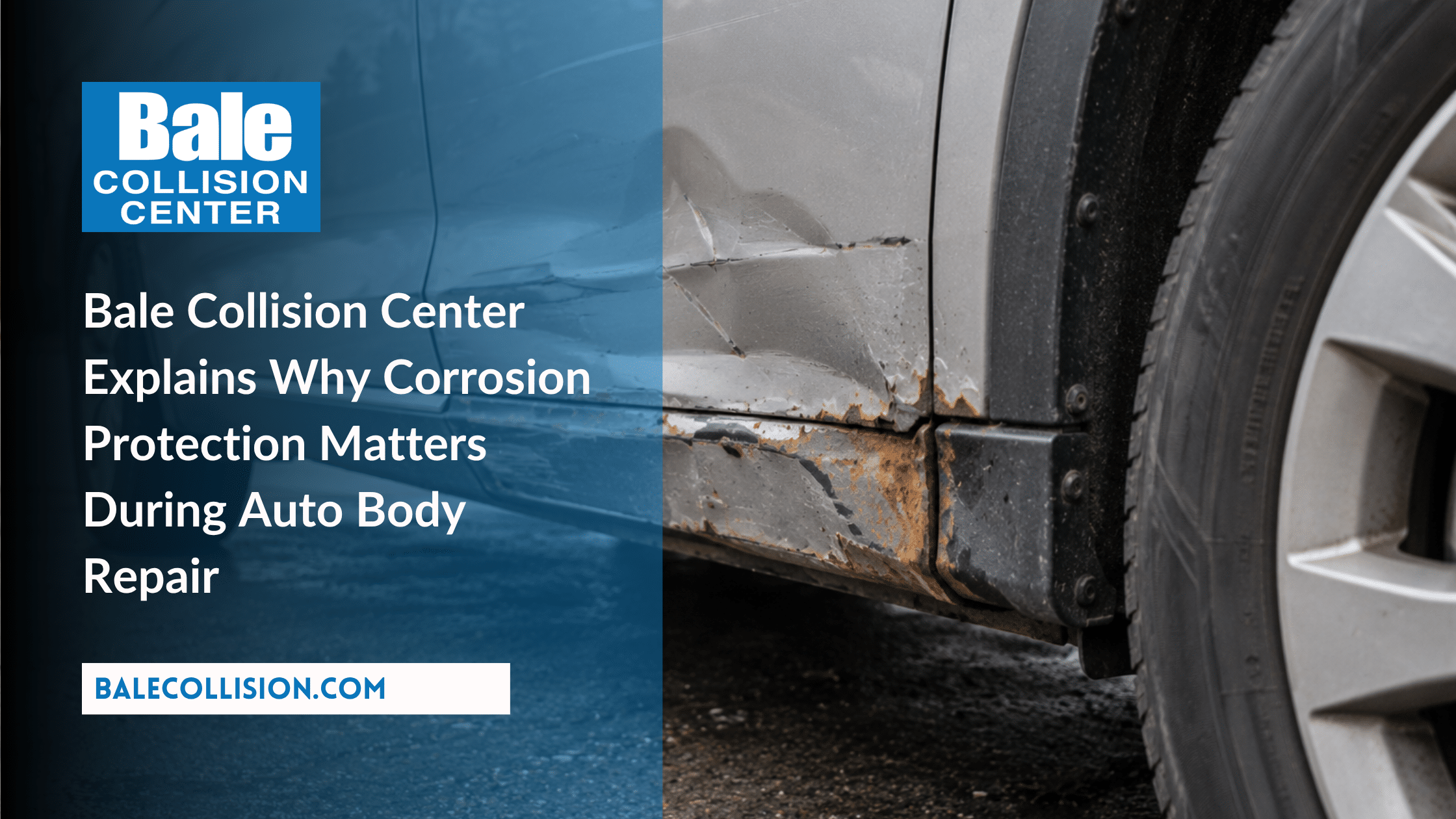

Little Rock, AR – October 07, 2026 – PRESSADVANTAGE –
Bale Collision Center has published consumer guidance focused on an often unseen stage of collision repair: restoring corrosion protection when body work disturbs factory-applied coatings, seams, or protected metal surfaces. The October publication explains how corrosion-related operations can be incorporated into repair planning when collision damage requires metal repair, welding, or component replacement.
The guidance expands on Bale Collision Center’s auto body repair information by distinguishing visible refinishing from protection applied to repaired surfaces, seams, attachment areas, and other locations that may be concealed after reassembly.
Vehicle manufacturers use different methods to protect body components from environmental exposure. Depending on the vehicle and location, these can include primers, coatings, seam sealers, cavity protection, corrosion-resistant materials, and other treatments. Collision damage can disturb that protection by exposing metal, deforming seams, or damaging previously coated surfaces.
Repair operations can affect these areas as well. Welding, grinding, sanding, straightening, sectioning, and component replacement may remove or disturb coatings around the repair location. As a result, applicable corrosion-protection steps can become part of the repair sequence rather than an optional cosmetic treatment.
The October guidance concentrates on three situations where this issue becomes particularly relevant: exposed or repaired metal, disturbed seams and joined areas, and replacement components.
Exposed metal is the most visible example. When collision damage penetrates the vehicle’s coating system, the underlying surface may require preparation and protection as part of the repair. The appropriate process depends on the substrate, damage, and vehicle-specific repair requirements.
Modern vehicles can contain several materials, including conventional steel, high-strength steels, aluminum, and nonmetal exterior components. Because those materials do not necessarily share the same repair requirements, technicians can identify the affected component and consult applicable manufacturer repair information before determining the repair process.
Disturbed seams and joined areas represent a less visible consideration. Vehicle bodies contain locations where panels are joined and protected during manufacturing. When collision repair requires work in one of these areas, welding or other operations can affect the original coatings or sealers around the repair.
Manufacturer repair procedures may identify preparation, seam sealing, coating, or related corrosion-protection operations for specific repairs. The applicable requirements vary by vehicle and component rather than following one universal procedure.
This distinction is important because many treated areas are difficult for a vehicle owner to see after the repair is complete. Seams, panel backsides, wheel openings, attachment locations, and enclosed sections may be covered by trim or adjoining components once the vehicle has been reassembled.
Bale Collision Center’s collision repair information provides broader context about repair planning and the use of vehicle-specific procedures when addressing accident damage.
Replacement components form the third focus of the October publication. Installing a new panel does not necessarily complete the corrosion-protection portion of the repair. Depending on the component and manufacturer instructions, installation can involve preparation of joining surfaces, refinishing, seam sealing, or protection of areas that become less accessible after assembly.
Repair sequencing therefore matters. Certain surfaces can be easier or necessary to address before another component is installed. Planning these operations alongside panel repair or replacement allows applicable protection to be incorporated at the appropriate stage.
Exterior refinishing serves a related but distinct function. Primer, color, and clear coat operations restore the repaired exterior coating system and appearance, while other corrosion-related procedures may address seams, attachment areas, enclosed sections, or surfaces affected by joining operations.
The new guidance specifically clarifies this difference for consumers. A completed exterior finish can show that the visible repair area has been refinished, but it does not illustrate every operation performed on surfaces concealed behind the finished panel.
For vehicle owners reviewing repairs involving significant metal work, the publication identifies the repair operation itself as a useful starting point. Repairs involving welding, panel replacement, damaged seams, or exposed metal are examples where applicable corrosion-protection procedures may need to be considered.
The resource also emphasizes that corrosion protection is vehicle- and repair-specific. The material involved, location of the damage, joining method, replacement component, and manufacturer procedures can all affect what steps apply. This avoids treating a single coating or application method as appropriate for every vehicle.
The October publication adds a focused corrosion-protection explanation to Bale Collision Center’s broader collision-repair information. Its purpose is to make an otherwise concealed part of body repair easier for consumers to understand, particularly when repairs extend beyond surface dent correction and refinishing.
Information about the facility is available through Bale Collision Center’s Chenal location resource.
The central point of the October guidance is that collision repair can disturb protective materials both during the accident and during necessary repair operations. When that occurs, applicable vehicle-specific procedures can address affected metal, seams, joined areas, and replacement components before those locations are concealed by final assembly.
Bale Collision Center is a family-owned collision repair business that has served the Little Rock community since 1952. The company provides collision repair, auto body repair, automotive paint services, paintless dent repair, glass replacement, and ADAS services through its two Little Rock locations. Its Chenal facility is located at 13101 Chenal Pkwy, Little Rock, AR 72211.
###
For more information about Bale Collision Center, contact the company here:
Bale Collision Center (Chenal)
Jason Spiller
(501) 221-7181
jspiller@baleautomotive.com
13101 Chenal Pkwy, Little Rock, AR 72211, United States